
An Assassin Who Waits Until You’re Tired
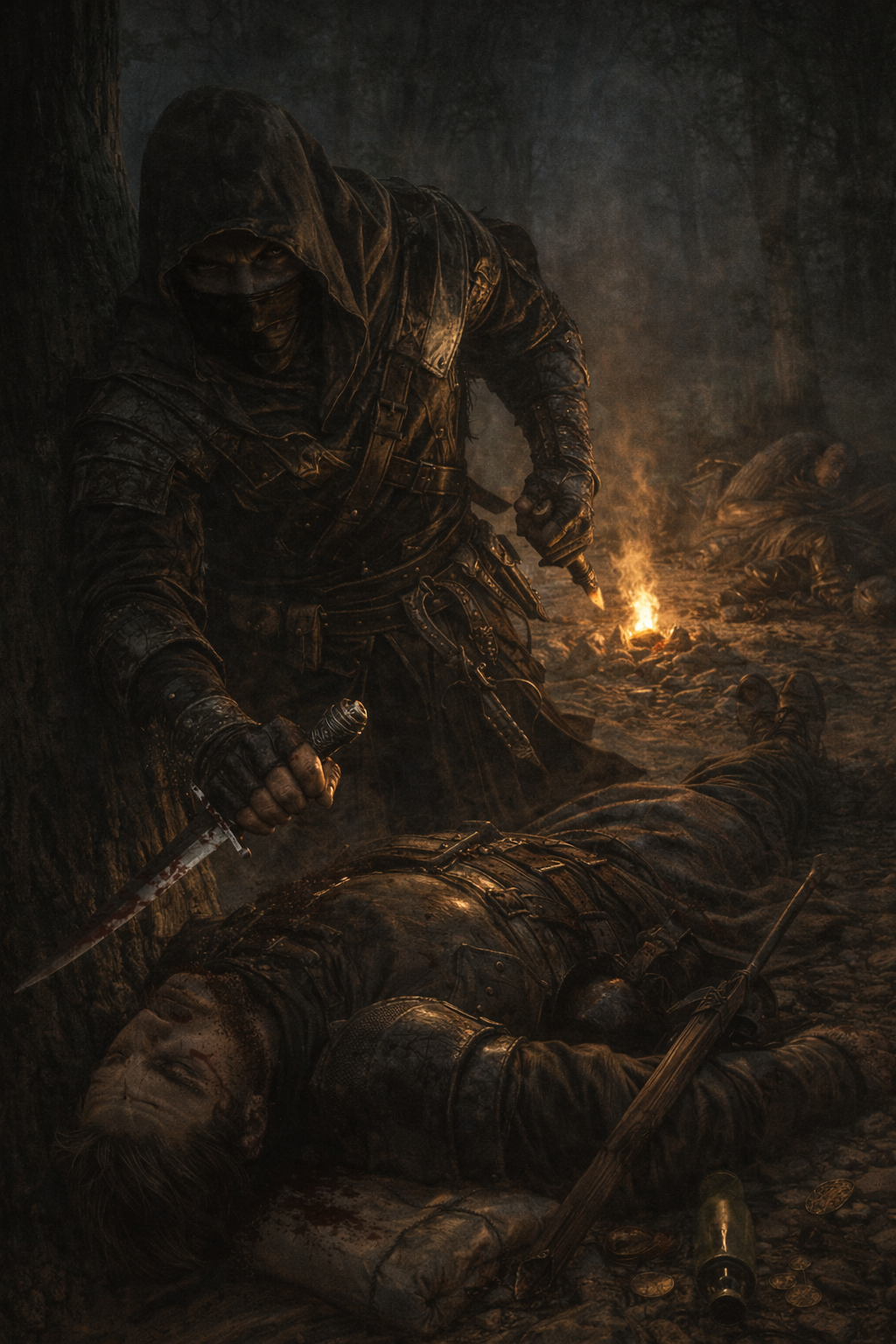
A GM NPC designed to punish overconfidence, poor pacing, and exhaustion-based mistakes
What This NPC Is (and Why They Matter)
This assassin is not fast.
They are not flashy.
They are not dramatic.
They are patient.
The Assassin Who Waits Until You’re Tired exists to remind players of something many tables forget: attrition is real. Resources matter. Fatigue matters. Mental load matters.
This NPC:
Avoids fair fights
Refuses to engage fresh heroes
Tracks routines, watches habits, and studies rest patterns
Strikes when the party is technically alive but practically depleted
They don’t need to win loudly.
They need to win once.
If your party treats every day like a single encounter sprint, this NPC exists to quietly dismantle that assumption.
If you’re new to how Mike’s Tavern builds NPCs as pressure systems instead of stat checks, start here:
About Mike’s Tavern
And if you need help calibrating tension without becoming adversarial, the
FAQ
is there to steady the table.
When to Introduce the Assassin
This NPC works best when:
The party is level 6 to 11
Players push deep without resting
Spellcasters routinely run dry
Marching order and watch rotations are sloppy
Ideal campaign placements:
Long wilderness journeys
Urban arcs with safehouses and downtime
War campaigns with stretched supply lines
Any story involving contracts, vendettas, or quiet retaliation
They do not belong in:
One-shot dungeon crawls
Purely heroic power fantasies
Tables that explicitly avoid attrition mechanics
If combat has started to feel like isolated set pieces instead of a connected day, this reframes the problem cleanly:
When every battle feels like a board meeting with dice
Core Personality: Calm, Detached, Unrushed
This assassin:
Does not hate the party
Does not rush the job
Does not improvise unless forced
Treats time as their greatest weapon
They are content to:
Cancel attempts
Abort clean shots
Walk away from “almost perfect” opportunities
They wait for:
Empty spell slots
Lingering injuries
Frayed nerves
Complacency
Players should feel hunted between encounters, not just during them.
Combat Role: Finisher, Not an Opener
This NPC is not built to start fights.
They are built to end days.
They:
Avoid full-party engagement
Strike isolated or exhausted targets
Withdraw immediately after delivering pressure
Do not pursue if the advantage is lost
They are not there to kill everyone.
They are there to prove that rest and vigilance matter.
For help running enemies who interact with pacing instead of hit points, this pairs well:
Why your party keeps falling apart and how to stop being the reason
Stat Philosophy: Threat Through Timing, Not Damage
Do not overstat this assassin.
Recommended approach:
Average Armor Class
Lower hit points than a true boss
High initiative and mobility
Strong Stealth and Perception
What makes them dangerous:
Choosing when to fight
Targeting the right moment
Leaving before the party can respond fully
Give them:
One strong opening strike that relies on surprise
One escape mechanic
One ability that punishes low resources
That’s enough.
Signature Behavior: The Wait
This assassin:
Observes camp routines
Tracks spell usage
Notes who keeps watch poorly
Tests defenses with harmless pressure
Examples:
Minor sabotage that forces checks
False alarms that disrupt rest
Near-miss sightings that raise paranoia
Attacks that stop once resistance appears
The party should feel worn down before the blade ever lands.
If your players ever accuse you of “being unfair,” this article helps reframe expectations:
Let the quiet player speak before I cast silence on ya
Equipment That Signals Intent
This assassin carries nothing unnecessary.
Typical gear:
Quiet, reliable weapon suited for precision
Backup escape tools
Minimal armor optimized for movement
Disguises, false papers, or local knowledge
Tools for surveillance, not slaughter
Looting them should reward information and caution, not wealth.
If your players treat equipment as cosmetic, this tends to correct that assumption quickly:
When you’re afraid you’re draggin the party down
How the Assassin Strikes (Table Feel)
Before combat:
Pressure builds
Rest becomes unreliable
Players argue about pacing
The strike:
Fast
Focused
Targeted at the weakest link right now, not overall
After:
Immediate disengage
No pursuit
No confirmation kill unless safe
The goal is not a body.
The goal is fear and adjustment.
Outside Combat: The Invisible Threat
This NPC excels as:
A recurring unseen danger
A name whispered by informants
Proof that someone is watching
A consequence for reckless pacing
Players should change behavior even when the assassin is nowhere nearby.
If emotional tension starts carrying between sessions, that’s a feature, not a bug:
Every party has that one player who brings snacks and trauma
Mike Weighs In
Worst killer I ever knew didn’t draw steel till the campfire burned low. Watched men argue themselves stupid, then picked the one rubbin his temples. If yer players learn to rest smart and watch smarter, this assassin’s done their job. If not… well. Fatigue kills cleaner than poison.
Scaling the Assassin
To scale this NPC:
Increase patience, not damage
Improve information, not defenses
Add support networks, not hit points
A higher-tier assassin waits longer and strikes cleaner.
If you want defensive play to feel dangerous without escalation, this complements it well:
The shield that bites back: how to turn defense into punishment
When to Let the Party Win
If the party:
Manages resources well
Rotates watches properly
Uses misdirection
Sets traps of their own
Let them catch the assassin.
Make it clear the victory came from discipline, not luck.
Last Call for GMs
The Assassin Who Waits Until You’re Tired exists to stretch time.
They don’t rush.
They don’t gloat.
They don’t explain.
They wait.
And when your players finally say, “We need to slow down,”
that’s the sound of the lesson landing.
If you want more GM-ready NPCs like this, or one tailored to your party’s habits, environment, or campaign arc, the tavern door’s always open:
Contact
