
The Definitive Greatsword Guide, Part 4: Using a Greatsword in Real Combat
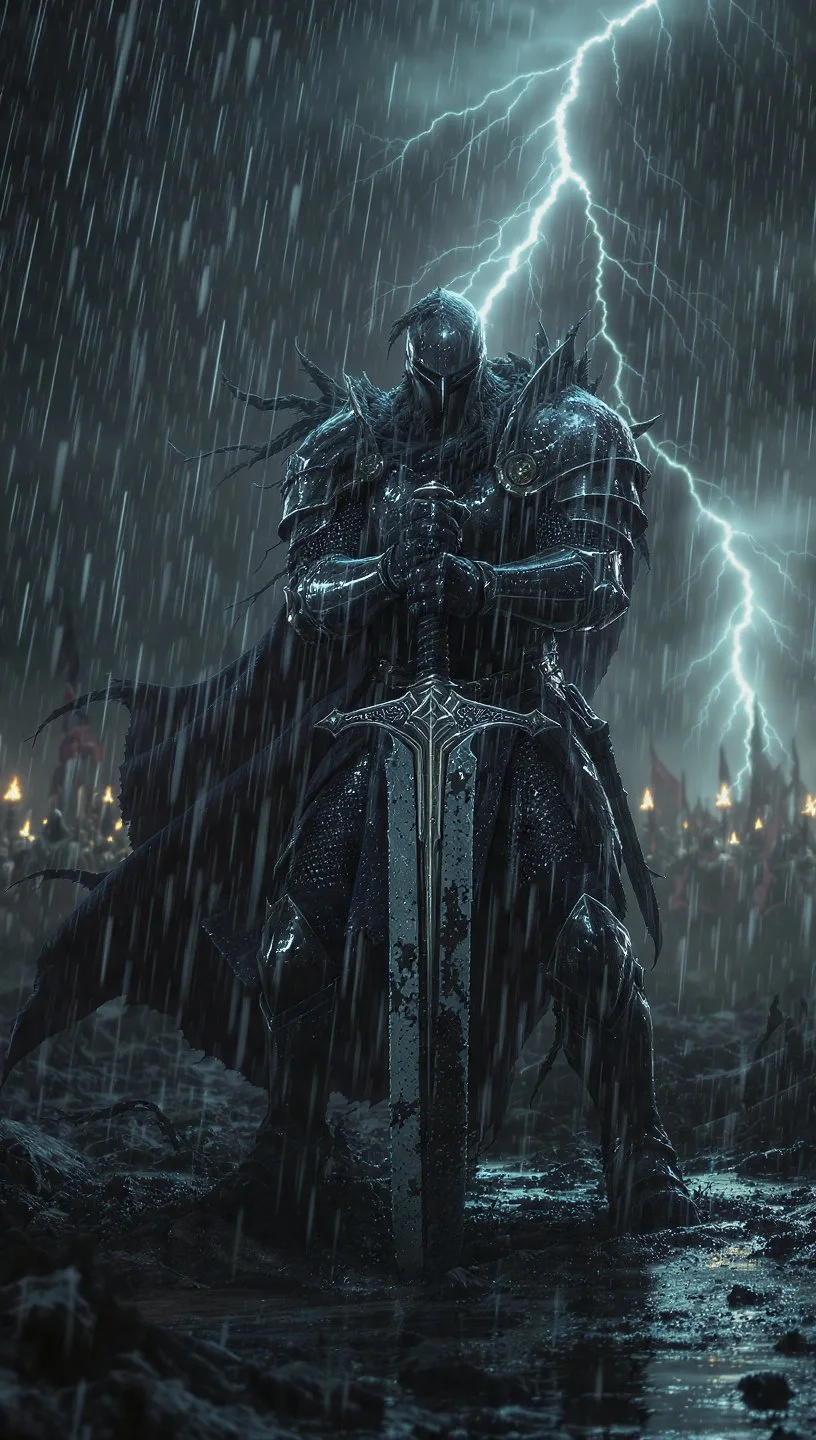
By Grabgar’s hammer, every fool loves the idea of a greatsword until the battlefield starts moving.
In the tavern, it sounds simple. Big blade. Big swing. Big damage. Everyone cheers. The bard writes a song. The goblins weep into their little goblin pillows.
Then the real fight starts.
The enemy does not stand still. The archer backs away. The cultist hides behind guards. The troll shoves past ya. The spellcaster floats into the air like a smug laundry ghost. The battlefield has pillars, ledges, corners, difficult terrain, frightened allies, dying allies, and one bard shouting, “I have a plan!” which is usually how ya know everyone is doomed.
That is where greatsword players learn the truth.
A greatsword is not just a damage tool. It is a positioning tool, a pressure tool, and a commitment tool. If ya only know how to swing it, ya will have fun for one round and regret for the next three. If ya know how to use it in real combat, the whole battlefield starts respecting where ya stand.
So let us sharpen the blade properly.
A Greatsword Is a Threat Zone, Not Just a Weapon
The first mistake greatsword players make is thinking their job begins when they roll damage.
Nope!
Yer job begins when enemies decide whether they can ignore ya.
A greatsword wielder creates pressure by standing in places that matter. Doorways. Narrow halls. Gaps between enemies and allies. The shortest path to the wizard. The space beside the injured cleric. The route the boss must take to escape.
If ya are standing somewhere useless, yer damage might still be high, but yer combat value is low.
That is the difference between a player who attacks and a player who controls pressure.
A greatsword does not have the reach of some polearms. It does not give ya the safety of a shield. It does not let ya poke from behind another warrior. So ya must make yer position count. When ya step forward, it should force the enemy to make an uncomfortable choice.
Do they attack ya and risk wasting pressure on the tough frontliner?
Do they move around ya and invite punishment?
Do they stay back and lose tempo?
Do they focus someone else and leave themselves open?
That is what real greatsword combat looks like. Not just “I swing.” More like “I stand here, and now the enemy’s turn is worse.”
For more thinking on this, read Why Position, Timing, and Target Choice Matter More Than Weapon Stats. It is one of the most important lessons a heavy weapon player can learn.
Do Not Chase the Biggest Enemy Automatically
Big sword players love big enemies.
Understandable. Nobody picks up a greatsword because they dream of gently correcting a rat.
But the biggest enemy is not always the best target.
In real combat, target choice matters more than ego. The best target is often the enemy whose removal changes the fight fastest. That might be the wounded brute about to act again. It might be the cultist concentrating on a spell. It might be the archer harassing the healer. It might be the minion blocking the party’s movement.
A greatsword hit that deletes a wounded enemy is often better than a larger hit into a boss that still has plenty of health left.
Why?
Because dead enemies lose turns.
That is one of the cleanest combat truths in tabletop games. Removing an enemy action can protect the party more than showing off against the toughest monster.
Greatsword players must learn to ask practical questions.
Who acts before my next turn?
Who is hurting the party most?
Who can I actually reach?
Who is already weak enough to finish?
Who is controlling space, spells, or movement?
If ya always chase the largest creature on the map, clever enemies will pull ya around like a dog chasing sausage. Do not give the Game Master that kind of entertainment for free.
Movement Is Part of Yer Damage
A greatsword that cannot reach the enemy is just furniture.
This is why movement matters. Too many players build for damage, then spend half the fight walking, climbing, squeezing, or chasing enemies who refuse to stand in the murder square.
In D&D and Pathfinder, movement is not just travel. It is damage preparation. It decides whether ya can attack the right target next turn. It decides whether enemies can reach yer weaker allies. It decides whether ya force the fight to happen where the party wants it to happen.
Sometimes the best greatsword turn is not the turn with the biggest hit.
Sometimes it is moving into the right lane.
Sometimes it is blocking a staircase.
Sometimes it is stepping beside an ally so the rogue can flank.
Sometimes it is refusing to overextend because the enemy wants ya isolated.
A greatsword player who moves well gets more useful attacks over the whole battle. A player who moves badly gets one exciting swing, then spends the rest of the encounter breathing heavily across the room.
By Brunlin’s missing eyebrow, do not be the warrior who gets kited by a skeleton with a shortbow and an attitude.
The Front Line Is a Promise
When ya carry a greatsword, the party often expects ya to be near the front.
That does not mean ya are immortal. It does not mean ya must charge first every time. It does not mean ya owe the party a heroic death because everyone else hid behind a barrel.
But it does mean yer position affects everyone else’s confidence.
A greatsword wielder standing firm can make the backline feel safe enough to cast, heal, shoot, and think. A greatsword wielder constantly wandering off to chase personal glory can leave the party exposed.
This is where combat becomes table culture.
Are ya playing with the group, or are ya playing beside the group?
A strong greatsword user knows when to advance and when to anchor. Anchoring is not boring. It is one of the most important things a melee character can do.
Hold the door.
Stand between the ogre and the wizard.
Make the assassin spend extra effort reaching the bard.
Punish the monster that tries to slip past.
That is not less heroic than chasing the boss. Sometimes it is more heroic because it requires discipline.
Mike’s Tavern has talked about this broader table lesson in The Strongest Character at the Table Is the One Who Listens. In combat, listening means noticing what the party needs, not just what yer build wants.
The Doorway Test
Here is a simple greatsword habit.
Before ya move, ask: “What happens to my party if I leave this space?”
If the answer is “nothing,” move freely.
If the answer is “the enemy reaches our healer,” think twice.
If the answer is “the wizard gets surrounded,” hold.
If the answer is “we lose the only safe lane,” plant yer boots and make the enemy come through ya.
A greatsword does not make ya the main character. It makes ya responsible for the space ya threaten.
When Not to Swing
This one hurts the damage chasers.
Sometimes the best greatsword move is not an attack.
Yes, yes, I hear the shouting already. “But Mike, I built the character to hit things!”
Good. Hit things when hitting things helps.
But real combat has turns where swinging is not the best answer. Maybe ya need to move. Maybe ya need to help an ally stand. Maybe ya need to shove, trip, grapple, intimidate, draw attention, take cover, drink a potion, or force the enemy to waste time.
In D&D, sometimes the better play is setting up advantage, controlling a route, protecting concentration, or preparing for the enemy’s movement.
In Pathfinder 2e, this lesson is even sharper. The three-action economy and Multiple Attack Penalty mean a third desperate Strike is often worse than repositioning, raising defense where possible, aiding an ally, stepping into a better square, or using a feat that makes fewer attacks matter more.
A greatsword player who refuses to do anything except swing becomes easy to predict.
A greatsword player who knows when not to swing becomes dangerous.
Because now the enemy cannot assume yer turn will be simple.
Use Terrain Like a Second Weapon
Terrain is where greatsword players become frightening.
A flat empty room rewards raw numbers. A real battlefield rewards judgment.
Doorways, corners, stairs, bridges, ledges, tables, wagons, trees, rubble, pits, and narrow tunnels all change what a greatsword can do. A heavy blade becomes much scarier when enemies cannot freely surround ya or slip past ya.
A doorway can turn one greatsword wielder into a wall.
A bridge can force enemies to approach one at a time.
A corner can protect yer flank.
A staircase can slow attackers.
A table can block movement.
A chokepoint can make the enemy regret having bodies.
This is why smart players look at the map before they look at the damage dice.
If the battlefield has structure, use it. Do not just run to the nearest monster like a hungry dog chasing a dropped sausage. Ask where yer weapon becomes harder to ignore.
The greatsword is at its best when enemies must enter yer threat to reach what they want.
Stop Overextending Like a Hero in a Bad Song
The most common greatsword mistake is overextension.
Ya see the enemy leader. Ya smell glory. Ya charge across the battlefield. Ya land one decent hit. Then ya realize the party is thirty feet behind ya, the enemy guards are surrounding ya, the healer cannot reach ya, and the boss is smiling.
Congratulations. Ya have delivered yerself.
Greatsword characters are especially vulnerable to this because the weapon fantasy encourages boldness. Boldness is good. Isolation is not.
Before ya rush forward, check three things.
Can my party follow?
Can my healer reach me?
Can I survive the enemy’s full answer?
If the answer to all three is yes, advance.
If the answer is no, maybe hold the line and let the enemy come to ya.
A greatsword wielder should feel brave, not impatient. There is a difference. Brave players take risks for a reason. Impatient players take risks because standing still feels boring.
That second group keeps tavern priests busy.
Greatsword Combat in D&D
In D&D, greatsword combat rewards steady pressure, advantage, and good target selection.
A Fighter wants to use repeated attacks to control tempo. Extra attacks make the greatsword feel reliable, especially when supported by strong positioning and weapon mastery. A Barbarian wants to use rage and advantage carefully, applying pressure without becoming reckless to the point of stupidity. A Paladin wants to choose the right hit to empower, turning a successful attack into a meaningful shift rather than wasting resources on every available target.
Greatsword users should pay close attention to advantage and disadvantage. Advantage can make heavy weapon feats and strong attacks much more reliable. Disadvantage can make even a powerful build feel miserable.
So fight for good conditions.
Knock enemies prone when it helps.
Coordinate with allies who can restrain, blind, frighten, or control targets.
Attack enemies who are already exposed.
Avoid wasting powerful swings into terrible odds unless the situation demands it.
Greatsword damage in D&D is satisfying, but greatsword pressure is what wins fights.
Greatsword Combat in Pathfinder 2e
In Pathfinder 2e, greatsword combat is more tactical and more punishing if ya get lazy.
Because of Multiple Attack Penalty, ya should not assume that attacking again is always the best use of an action. A greatsword character often wants strong setup, good positioning, and fewer attacks with better odds.
Fighter excels because accuracy matters so much. Barbarian excels when it can land meaningful blows while managing risk. Champion can create protective pressure. Magus can deliver dramatic charged strikes, but must respect setup and action cost.
Pathfinder greatsword users should think constantly about off-guard enemies, flanking, frightened conditions, Aid, movement, and action compression. A single strong attack with good support can outperform repeated low-quality attacks.
This makes the greatsword feel less like a spam weapon and more like a tactical hammer.
Ya are not just swinging.
Ya are choosing when the swing deserves the action.
Damage Is Better When It Removes Problems
A greatsword hit should solve something.
If ya deal huge damage but leave the enemy’s most dangerous action untouched, ya may not have helped as much as ya think. If ya deal moderate damage but remove a creature before its turn, protect an ally, break concentration, or force the enemy to retreat, that hit may be worth more.
This is where players must stop worshipping big numbers.
Big numbers are fun.
Solved problems win fights.
A greatsword user should care about damage that changes enemy behavior. If the enemy ignores ya, make them regret it. If they focus ya, make sure the party uses that opening. If they retreat, punish the space they gave up. If they swarm ya, make them pay for standing together.
That is how heavy weapon pressure works.
For a deeper look at squeezing value from ordinary attacks, read How to Get More Damage from the Same Weapon Without Changing Your Build. It fits greatsword combat perfectly because many players already have enough damage. They just need to aim it better.
Protect the Party Without Becoming Boring
Some players fear that responsible melee play means giving up fun.
Nonsense.
Protecting the party with a greatsword can be thrilling because it gives yer choices weight. When ya hold the bridge, the wizard lives. When ya finish the wounded ghoul, the cleric avoids a saving throw. When ya stand beside the rogue, both of ya become more dangerous. When ya block the tunnel, the party has time to breathe.
That is not boring.
That is being useful.
The trick is to think of protection as active pressure. Ya are not standing still because ya have no ideas. Ya are standing there because yer position creates consequences.
A greatsword wielder does not need a shield to protect the party. Sometimes the threat of a massive blade is enough to shape enemy choices.
And when it is not enough?
Well, then ya swing the bleeding thing.
The Final Lesson: Be Where the Fight Breaks
The best greatsword users are not always where the biggest enemy is.
They are where the fight is about to break.
That might be the front line.
It might be beside the healer.
It might be at the doorway.
It might be near the spellcaster concentrating on the one effect keeping everyone alive.
It might be between the boss and the exit.
It might be behind the enemy line, if the party can support that move.
The greatsword is powerful because it makes yer presence costly to ignore. Use that. Do not drift. Do not chase randomly. Do not measure success only by damage rolled.
Ask where yer blade changes the next round.
That is real combat.
Not just a big swing.
A meaningful one.
Bring Yer Blade Back to the Tavern
A greatsword in real combat is not about charging every enemy like a goat with a helmet.
It is about pressure, patience, and timing.
Stand where ya matter. Choose targets that change the fight. Use terrain. Protect allies. Avoid overextension. Support the swing before ya demand glory from it.
Do that, and yer greatsword becomes more than a damage number. It becomes a battlefield argument the enemy cannot ignore.
If ya are new to the tavern, start with About Mike’s Tavern, check the FAQ, or send a message through the Contact page if ya need help finding the right shelf, guide, or weapon rack.
