
When the Table’s Full. But It Feels Empty
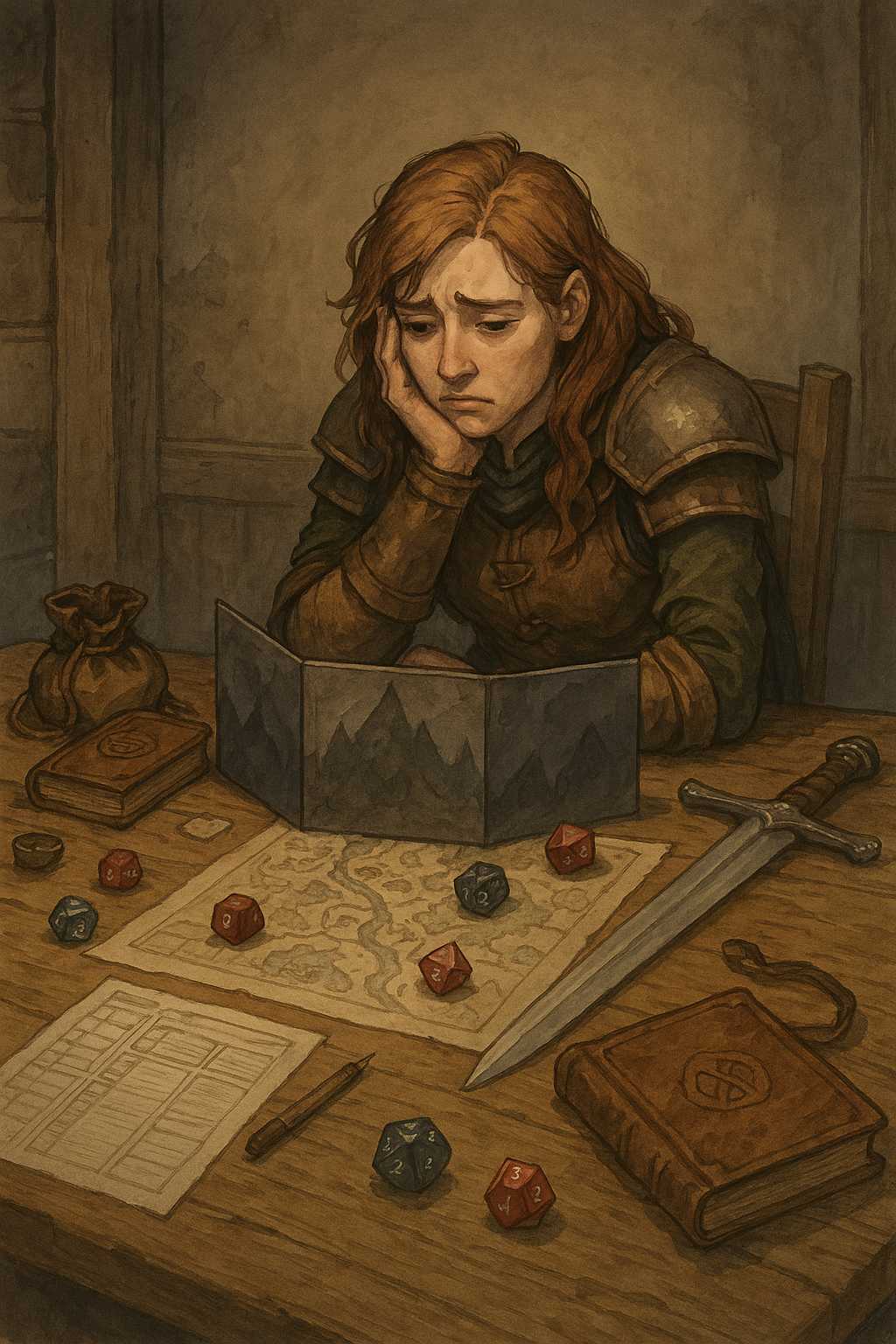
By Elgrin’s empty scrollcase, I’ve seen it too many times. Every seat’s taken, dice clatterin’, snacks piled high, and yet… silence. Or worse, chatter that’s got nothin’ to do with the game. A table can be packed with bodies but still feel emptier than a dragon’s vault after the adventurers have been through.
I remember one campaign where I had eight players — aye, eight. Thought it’d feel like an army. Instead, it was like tryin’ to herd goats through a mine shaft. Half o’ them talked over each other, the other half stared at their sheets like they were readin’ dwarven taxes. By the end of the night, I’d rather be trapped in a gelatinous cube — at least then someone’s makin’ noise.
📌 Here’s the hard truth: a full table don’t mean a full game.
👉 And when the fire dies, ye need to stoke it. That’s what Mike’s Tavern is for — remindin’ GMs that life behind the screen ain’t just about warm bodies in the chairs.
Why an “Empty” Table Happens
It ain’t always laziness. Sometimes it’s the way the table’s built.
Too many players, not enough spotlight. When six folk fight for attention, half will go quiet, and one loud lad will drown the rest. (See: When the Loudest Player Runs the Table).
Wrong expectations. Some come for drama, others for dice. If nobody agreed at session zero, the table feels like three different games mashed together.
Out-of-game distractions. Phones, food, or worse — players who think the game’s just background noise. Those milk drinkers should’ve stayed home.
GM burnout. If yer heart ain’t in it, the players can smell it faster than goblins smell stew.
How to Breathe Life Back Into a Silent Table
Cut the fat. Aye, I said it. If eight players feels like pullin’ teeth, scale back. Better four voices that sing together than eight arguin’ like goats in armor.
Pass the torch. Let the quiet ones handle an NPC, describe a scene, or roll for the tavern crowd. Give ‘em a job, and suddenly they’re awake.
Mix up the format. Don’t let every night be another slog o’ dice and dungeon maps. Throw in mysteries, politics, or downtime sessions where characters breathe.
Call it out. If folk are starin’ at their laps instead o’ the battlemap, tell ‘em plain. A GM’s voice is the forge hammer — when it rings, they listen.
Focus the spotlight. Take the tale one player at a time. Make sure each gets a moment that matters, even if it’s short.
Remember, a silent table ain’t just awkward. It’s poison. Left unchecked, it kills the campaign.
The Deeper Wound
Truth is, lad, when a table’s full but feels empty, it ain’t just the players at fault. Sometimes it’s us GMs who overreach. We pack the chairs hopin’ for a livelier tavern, but what we get is noise without harmony. And when that happens, ye’ve got two choices:
Fix the root, trim the party, and light the forge anew.
Or accept the silence, let the campaign die, and pour yerself a stiff drink while ye plan the next.
By Durven’s last tankard, I’d always choose the first. But don’t shame yerself if the second’s the only sane path left.
📌 A Full Table Don’t Mean a Living One
👉 If yer game feels empty, don’t settle for hollow echoes. Stir life back into it, or start fresh with a flame worth tendin’. Check the GM Wisdom scrolls, holler through the contact page, or remind yer loud lad that loot don’t make leadership.
FAQ
Q: What’s the ideal number of players for a game?
A: Depends on yer sanity, lad. Four to five’s the sweet spot — enough variety, not so many that yer voice gives out.
Q: How do I keep quiet players engaged?
A: Give ‘em smaller, safer moments first. A merchant’s haggling, a guard’s suspicion, a drunk dwarf’s song. Build their courage like ye’d build a fire: slow and steady.
Q: Should I cut players from the table if they’re the problem?
A: If the table’s misery outweighs the fun, aye. Don’t let guilt chain ya to folk who don’t care. Better a small table burnin’ bright than a big one drownin’ in silence.
